
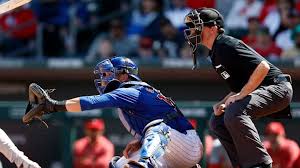
Major League Baseball is entering a new era.
In 2026, the league will implement the Automated Ball-Strike Challenge System (ABS) for the full season, beginning on Opening Night. This is not a complete removal of the human element behind the plate, but it is a major step toward integrating technology into one of the most debated parts of the game.
Balls and strikes have always been part of baseball’s identity.
Now, for the first time, players will have the ability to challenge them in real time.
How the ABS Challenge System Works
The system is designed to be simple, fast, and minimally disruptive to the flow of the game.
Each team receives:
- Two challenges per game
- Challenges are retained if successful
- Additional challenges awarded in extra innings
Only three players can initiate a challenge:
- The pitcher
- The catcher
- The batter
And it must happen immediately.
A challenge is triggered by a quick tap of the helmet or cap right after the pitch. Once initiated, the system uses T-Mobile 5G-powered tracking technology and perimeter cameras to determine whether the pitch was a ball or strike.
The result is displayed on the scoreboard within seconds.
No arguments. No delays.
Just a decision.
What This Fixes: Accuracy and Accountability
The biggest advantage of ABS is obvious.
Accuracy.
Missed calls have always been part of the game, but in today’s environment where every pitch is tracked, replayed, and analyzed, those missed calls are more visible than ever.
This system gives players control.
If a hitter knows a pitch was off the plate, he can challenge it. If a pitcher dots the corner and does not get the call, he has a way to correct it.
That changes accountability.
It also removes some of the frustration that can shift momentum in a game. A bad call in a key situation no longer has to define an inning.
A Shift in Catching: The Framing Debate
One of the biggest ripple effects will be on catchers.
For years, pitch framing has been one of the most valuable defensive skills in baseball. Elite catchers could turn borderline pitches into strikes through subtle glove work and presentation.
With ABS in play, that skill becomes less impactful.
If a pitch is not a strike, it will not be a strike.
That forces a shift in how catchers are evaluated.
Blocking, throwing, game-calling, and leadership will take on even greater importance. The position becomes less about influencing the umpire and more about controlling the game.
The Pace and Flow of the Game
One of the concerns with any new system is how it affects the rhythm of the game.
Early indications suggest the ABS challenge system is designed to protect pace, not slow it down.
Challenges are:
- Immediate
- Player-initiated
- Resolved quickly
There are no long delays or extended reviews.
In fact, the system may actually improve flow by eliminating prolonged arguments between players and umpires.
The game moves forward.
The Human Element: What Gets Lost
There is another side to this.
Baseball has always been a human game.
Umpires, like players, are part of the fabric of the sport. Their judgment, their consistency, even their strike zones have been part of the game’s identity.
ABS reduces that element.
There will be fewer arguments. Fewer moments of emotion tied to controversial calls. For some, that is progress.
For others, it is a loss.
Because part of baseball’s history is built on those imperfections.
Strategy and Game Awareness
This system also introduces a new layer of strategy.
Teams now have to decide:
- When to challenge
- When to hold a challenge
- Who takes control in key moments
Do you challenge early to protect an at-bat?
Or do you save it for a late-game situation?
Players will need awareness and discipline.
Wasting a challenge could cost you later.
Using one at the right time could change the game.
The Bigger Picture: Where the Game Is Headed
The introduction of ABS is not just about balls and strikes.
It is about the direction of baseball.
The game is evolving.
Technology is becoming more integrated. Decisions are becoming more precise. And the balance between tradition and innovation is being tested in real time.
This system is a step toward consistency.
A step toward fairness.
But also a step away from some of the unpredictability that has always defined the game.
The Next Phase of Baseball
The 2026 season will be a turning point.
Players will adjust. Coaches will adjust. The game itself will adjust.
There will be moments where ABS clearly improves the outcome. There will also be moments where people question whether something was lost in the process.
That is the reality of change.
But one thing is certain.
The strike zone will never be viewed the same way again.
And how players respond to that shift will define this next era of Major League Baseball.
Leave a Reply