
Some people unwind at night by watching movies.
I watch old baseball games.
There is something about going back and studying baseball history that always pulls me in. Maybe it is the strategy. Maybe it is the emotion. Maybe it is hearing the voices of legendary broadcasters or watching players compete during a different era of the game.
Baseball has a way of transporting you.
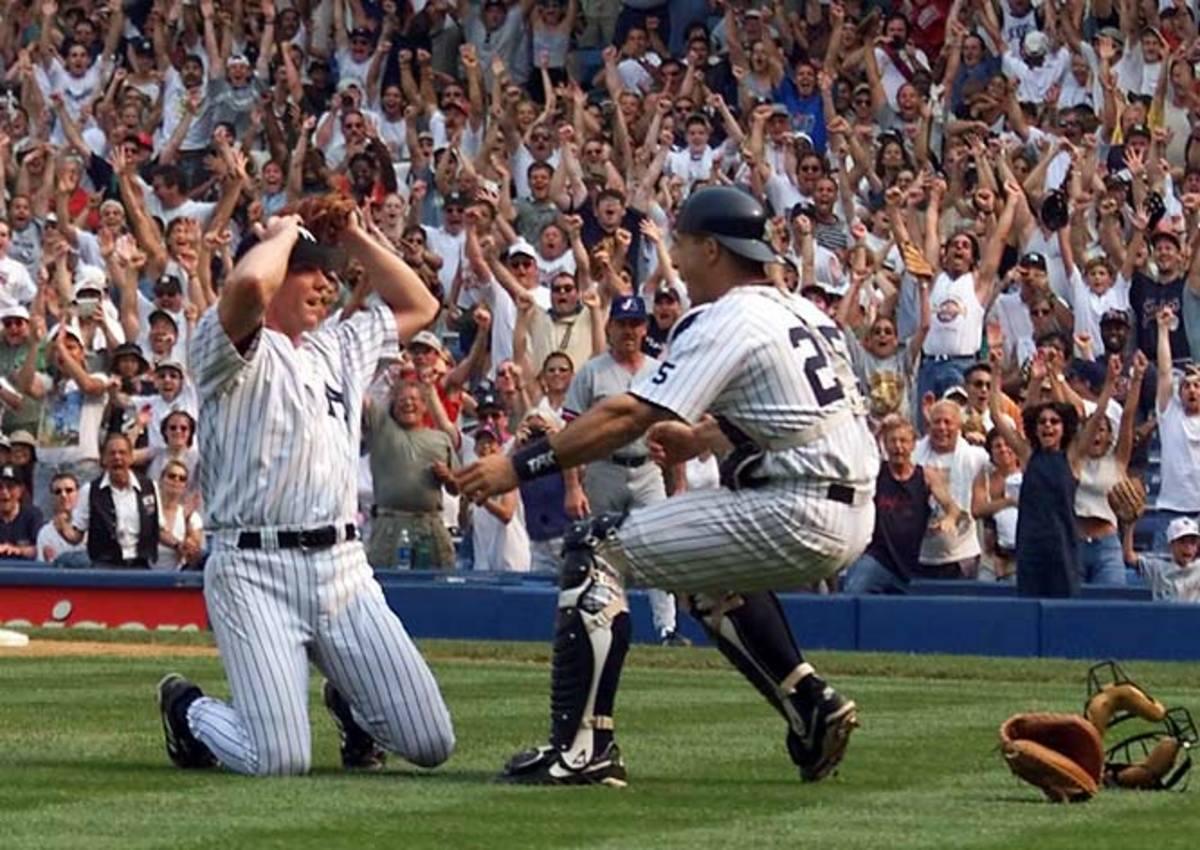
Tonight, I found myself watching David Cone’s perfect game from July 18, 1999.
And man, what a baseball game that was.
Not simply because of the perfect game itself.
Because of everything surrounding it.
When you watch it back today, you realize it felt bigger than baseball. It felt like one of those rare afternoons where history, emotion, legends, and maybe a little baseball magic all collided at exactly the right moment.
Yogi Berra Finally Returned Home
The perfect game is what most people remember.
But the story before the first pitch might be even more powerful.
That afternoon was officially Yogi Berra Day at Yankee Stadium.
For fourteen years, Yogi Berra had stayed away from the Yankees after a painful fallout with owner George Steinbrenner following Berra’s dismissal as manager in 1985.
Yogi had become one of the greatest figures in Yankees history, yet Yankee Stadium had felt incomplete without him.
Then came reconciliation.
Steinbrenner apologized.
Yogi returned.
And suddenly it felt like something had been restored.
Baseball has always been bigger than statistics.
Sometimes it is about people.
Sometimes it is about healing old wounds.
Legends Were Everywhere That Afternoon
What happened next almost felt impossible to script.
Standing on the field before the game was Don Larsen, owner of the only perfect game in World Series history.
Standing behind him was Yogi Berra, the catcher who had leaped into Larsen’s arms after the final out in 1956, creating one of baseball’s most iconic images.
Forty-three years later, there they stood again.
Larsen threw out the ceremonial first pitch.
Yogi caught it.
You could almost feel history breathing inside Yankee Stadium.
The ghosts of baseball seemed alive that afternoon.
Joe Girardi Borrowed a Little Yogi Magic
One of the most incredible details from that day involved Joe Girardi.
Girardi was behind the plate catching Cone that afternoon and had handed Yogi his own glove to use for the ceremonial first pitch.
Afterward, Yogi handed it back.
Girardi later tucked that glove inside his chest protector for the game.
Now maybe you call that superstition.
Maybe coincidence.
Or maybe baseball just works in strange ways.
But tell me there was not a little Yogi magic sitting behind home plate that afternoon.
Because some days at Yankee Stadium felt different.
And this felt like one of them.
David Cone Was Brilliant
Cone was not simply good that day.
He was in complete control.
Twenty-seven hitters stepped into the batter’s box.
Twenty-seven hitters walked back to the dugout.
Perfect.
Ten strikeouts.
Zero walks.
Only 88 pitches.
Not a single Montreal Expos hitter even worked a three-ball count.
Think about that for a second.
Today, it almost sounds impossible.
Because modern baseball has become a battle of patience and pitch counts.
Back then, pitchers attacked.
Hitters attacked.
And Cone controlled every inch of the game.
Of course, every perfect game needs help.
Paul O’Neill made an outstanding running catch.
Chuck Knoblauch made a critical play.
Ricky Ledee tracked down a deep fly ball in the ninth inning.
Perfect games belong to pitchers.
But they also belong to every player who protects history around them.
David Cone Said Something That Stood Out
After watching the game itself, I stayed for Cone’s postgame interview.
And one comment jumped out immediately.
Cone talked about facing a young Montreal Expos lineup and needing to expand the strike zone that day.
Pitchers talk about this all the time.
Expanding the zone.
Working the corners.
Stealing strikes.
Living on the edges.
That has always been part of pitching.
The great ones never simply overpowered hitters.
They manipulated hitters.
They created uncertainty.
They changed eye levels.
They understood umpires.
They trusted their catchers.
Pitching was never only about velocity.
It was art.
Which Brings Up A Bigger Question
As I sat there watching that game tonight, one thought kept coming back into my mind.
In baseball’s new ABS era, will we ever see another perfect game?
The talent is too great.
Pitching is too dominant.
But perfect games are different.
Perfect games require something almost impossible:
Elite stuff.
Elite command.
Great defense.
Some luck.
And maybe a little baseball magic.
Now baseball is moving toward precision.
Toward exact strike zones.
Toward removing gray areas.
Pitch framing matters less.
Borderline strikes become harder to earn.
Pitchers lose some ability to manipulate the edges.
The game becomes more measured.
More exact.
Did Imperfection Help Create Perfection?
Maybe that is why Cone’s game felt different watching it today.
Because baseball itself was imperfect.
And somehow perfection emerged from that imperfection.
There were human umpires.
Human emotions.
Human reactions.
Pitchers earning calls.
Catchers stealing strikes.
Veterans understanding how to attack hitters.
All those little things helped shape baseball into the game many of us fell in love with.
ABS may improve accuracy.
It may improve fairness.
But it also raises a fascinating question:
Can baseball become so perfect that it accidentally removes some of the magic?
Final Thoughts
David Cone threw a perfect game that afternoon.
But honestly, the day itself felt perfect too.
Yogi Berra returned home.
Don Larsen stood beside him.
Joe Girardi carried a little Yogi magic behind the plate.
Yankee Stadium felt alive.
And Cone delivered one of baseball’s most unforgettable performances.
Maybe it was destiny.
Maybe coincidence.
Maybe baseball simply gives us moments like that every once in a while.
Whatever it was, it reminded me why I still love watching old baseball games.
Because every now and then, you find something that feels bigger than baseball itself.
Leave a Reply